How Dr. Sean Moves Past the Assembly Line Approach to Find What Actually Makes Your Body Tick
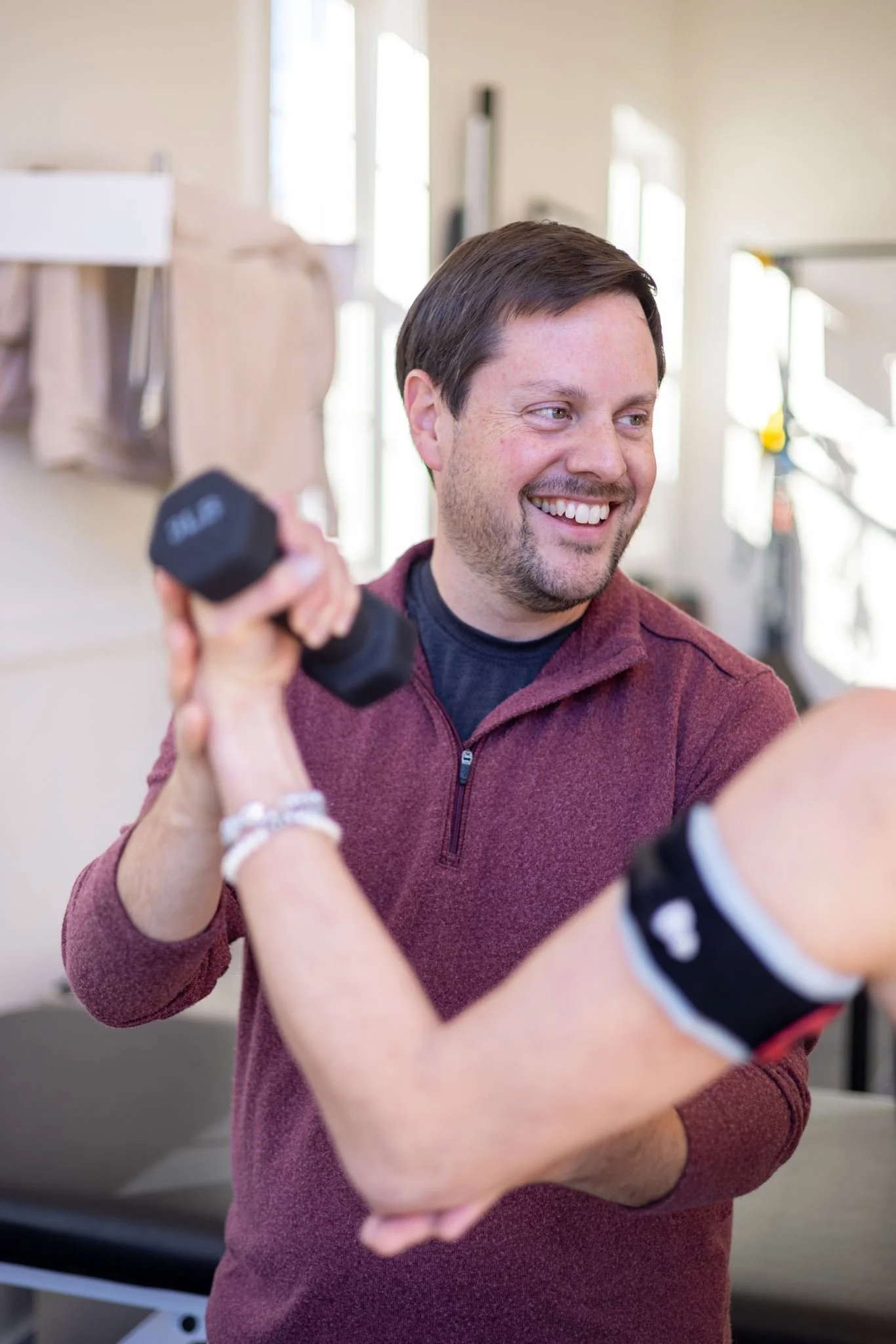
Meet Sean, the newest Doctor of Physical Therapy to join the team at Centreboard. Below, he shares his path to physical therapy, why he treats exercise like a toolbox rather than a chore, and what makes his approach unique.
Before I ever stepped into a clinic as a Doctor of Physical Therapy, I was a patient nursing a knee injury. At the time, I was living in Boston, dealing with the daily challenge of descending a hundred subway stairs on an acutely painful knee. I had always played sports, but I had zero formal training around how my body actually worked.
When I finally started physical therapy, it was the first time anyone had ever given me a purpose-driven framework for fixing a physical problem. The results were immediate, but the real surprise came afterward: when I went back to playing sports, not only was my knee pain gone, but I was faster, stronger, and felt more athletic than I had been before the injury. That was transformative. I had no idea that guided, structured exercise could shift your relationship with your own body so drastically.
Coming from a family of nurses and healthcare workers, I grew up flipping through anatomy atlases and thinking human anatomy was remarkably cool. But that experience with my own knee was the pivot point. It showed me that physical therapy isn't just about managing a symptom, it is about problem-solving, education, and giving people the agency to shape how they move and feel.
The Anatomy of Ownership: Why the "Why" Matters
In traditional medical models, patients are often handed a diagnosis and a generic prescription. You are told your knee has a tear, or your shoulder has impingement, and you are given three standard exercises with an instruction to trust the process.
That may be a good start, but it is neither an accurate blueprint that maps how bodies heal and rebuild, nor is it specific to the individual.
Your joints, muscles, and nervous system operate as an interconnected engineering system. When pain occurs, it is rarely isolated to one target spot. Pain alters the way your brain loads a joint, causes neighboring muscles to compensate, and changes how you move through basic daily patterns like getting off the floor, walking down stairs, or picking up a child.
Understanding the "why" behind these mechanical connections is the key to lasting recovery. When you understand why a specific tissue is under stress and how targeted load helps it rebuild, you stop guessing. You stop treating exercise like a punishment or a plate of cold steamed broccoli you feel forced to eat, and start seeing it as a set of tools you control.
When we work together, my goal is to build you a personalized toolbox of lifestyle adjustments, self-care strategies, and movement habits. That way, if a flare-up happens five years down the road, you do not feel helpless. You know how your machine works, and you know how to fix it.
Moving Beyond the Assembly Line
When a referral lands on my desk for a rotator cuff repair, the surgical report might look identical to five others I have seen that month: same tear size, same procedure, same surgeon. But that paper does not capture the human attached to it.
Every person brings a completely different set of life experiences, fears, daily demands, and goals to the clinic. One person's non-negotiable might be getting back on the water; others might be working in the garden without a burning ache at night. Finding that specific piece of the puzzle, the exact thing that makes you nervous to move and the goal that is meaningful to you, is where physical therapy becomes truly transformative.
To do that properly, you need time spent with your patient. You cannot figure out what drives a person if you are rushing between three patients at once.
At Centreboard, we take a different approach. Having dedicated one-on-one time allows us to actually sit down, listen, and map out your case without distraction. It gives us the space to dive into the nuances of your recovery, answer questions, adjust plans, and handle the background logistics so you can focus entirely on getting better.
A Team-Based Approach to Getting Stronger
I tell my patients early on that we are a team. I bring the clinical background, the biomechanics, and the movement theory. But you are the world's expert on what your body feels.
When we combine anatomical knowledge with your lived experience of how your body actually feels, we can figure out the exact right amount of exercise load. We can progress your strength as quickly as possible while still respecting the natural timeline your tissues need to heal.
Physical therapy is often labeled as strictly reactive, something you do only after a disaster happens. But taking control of your health means looking at the conservative factors you can directly influence. You do not have to give up on activities you love or accept pain as an inevitable tax on aging. You have far more power to shape your recovery, strength, and longevity than you might think.
When you walk out of our doors, my priority is that you walk out having felt heard. Medicine can sometimes feel transactional, but your pain and limitations deserve careful consideration. Beyond that, I want you to walk out with a clear path forward, equipped with the exact tools you need to take ownership of how you feel every day.
If you’re local to greater Portland and in need of physical therapy, come see us at our office in North Yarmouth or Yarmouth, Maine. To learn more about offerings or insurance, visit our website, or go ahead and schedule a complimentary 15-minute video consultation.